Saturday, July 18, 2009

The Collector's Guide to Rare British Birds


Continuing in Wonderland this week, we're tracing the career of the multi-talented Ronnie Wood. This entry focuses on Ron's first band, the Birds (not the California band with a 'y', although they do figure into the British Birds' story).

The Birds were a hard-working, highly respected R&B outfit based in West London and were comprised of Ron on lead guitar, lead vocalist Ali MacKenzie, rhythm guitarist Tony Munroe, bassist Kim Gardner (who later joined the Creation with Ron) and drummer Pete McDaniel. By August of 1964, their reputation as a top live act with a devoted local following garnered them a spot on the BBC variety show, ABC of Britain, where they performed a Wood original, "You're on My Mind." Due to the success of this performance, the Birds secured a residency at London's 100 Club, which in turn lead to a recording contract with Decca Records. "You're on My Mind" served as the A-side of their first single, backed by Bo Diddley's "You Don't Love Me." Other singles followed, including a cover of the Holland-Dozier-Holland classic "Leaving Here."

All appeared to be going well for the British Birds until it came to their attention that several Birds fans were being sold singles by an American group called the "Byrds" instead. Their manager, Leo de Clark, sought legal action but was unsuccessful in forcing the popular American group to change their band's name. By 1965, the Birds had left Decca for Reaction Records, but delays in single releases took a toll on the group's morale. In 1966, the Birds performed "That's All I Need," a Wood/Monroe original, in the B-movie The Deadly Bees, which is featured in the clip presented here. (I cribbed this clip from "garageman" on YouTube--credit where it is due!)

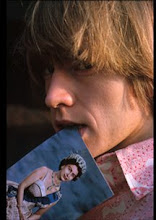
The Birds were truly a dynamic R&B group, on par with the Pretty Things and the Rolling Stones in terms of having an exciting, raw sound. Their singles certainly stand up today, and they deserved far greater success than they obtained at the time. For a comprehensive collection of all their recorded output, including demos and previously unissued tracks, please seek out The Collector's Guide to Rare British Birds CD compilation from 1999 on the Deram/Decca label. The scans above come from my copy of a rare French CD EP.

(Reference: The liner notes to The Collector's Guide to Rare British Birds, written by Terry Rawlings.)

Thursday, July 2, 2009

"Our Music is Red - with Purple Flashes." - Eddie Phillips, 1966


One of the true cult bands of the Sixties, the Creation epitomized Mod in terms of image and music. Their Pop Art-influenced sound perfectly crystallized the progression from British beat to psychedelia in a form of music now termed "freakbeat." As evidenced in the clip above, the Creation's sound was explosive and original; their stage shows were as well, as their goal was to pioneer a "total sound culture." (In fact, during live performances, lead singer Kenny Pickett painted canvases and bikini-clad girls on stage.) Although the Creation recorded one album and a handful of singles, they have had an immense influence on subsequent musicians, especially uberfan Alan McGee who named his successful record label "Creation Records" (which in turn became home to Britpop legends Oasis).

The most popular line up of the Creation consisted of vocalist Kenny Pickett, bassist Bob Garner, drummer Jack Jones and innovative guitarist Eddie Phillips. Phillips utilized feedback and a violin bow on his guitar before Jimmy Page did the same with the Yardbirds and Led Zeppelin, yet he rarely receives the credit he is due. Shel Talmy, producer of both the Kinks and the Who, helped develop the Creation's sound in the studio after signing them to his own Planet label. "Making Time," their first single (and the song in the clip above), became widely known with its inclusion in the 1998 Wes Anderson film, Rushmore.

Tensions within the band led to many personnel changes, including the departures of Pickett and Phillips and the addition of Ronnie Wood. It was Wood's departure to join the Jeff Beck Group that proved fatal for the band. The classic Creation line up reunited for several London shows in the mid '90s, effectively healing past wounds. Sadly, Kenny Pickett passed away suddenly, cutting short the Creation's triumphant return.


Tuesday, June 9, 2009

Dedicated To Hugh But You Weren't Listening


This week the world lost one of it's most innovative composers and bassists; therefore, I feel compelled to honor his memory on this humble blog about British music. Hugh Hopper became a full-fledged member of the Soft Machine, having previously been their roadie (and the writer of one song on their debut LP), at the end of 1968. Kevin Ayers, the band's previous bassist and principal songwriter, had retreated to the hippie haven of Ibiza after a particularly difficult tour. Unable to contact Ayers, drummer and vocalist Robert Wyatt and keyboardist Mike Ratledge recruited Hopper to fill the vacant position. With the addition of Hopper, the Soft's sound evolved. His phenomenal fuzz-bass sound and composing skills enhanced their avant garde propensities, evident on their second album, Volume Two. Hopper passed away June 7th, a victim of leukemia.

The Soft Machine, named after the William S. Burroughs novel, was one of the most important bands of the British psychedelic movement of the 1960s. Along with Syd Barrett's Pink Floyd, the Softs performed at the now legendary 14 Hour Technicolor Dream and Christmas on Earth festivals. Unlike Floyd, however, the Softs moved in a more non-commercial direction as the years passed, progressing to an art rock/jazz fusion (with the additon of saxophonist Elton Dean) that was truly unique and wholly satisfying. The Soft Machine made "music for the mind (which) floats you gently downstream, through pleasurable twists and turns, ups and downs, rapids and calm waters" as the liner notes to Volume Two explain. Other wonderful elements of the Softs are Robert Wyatt's emotive vocals, always touching and evocative, and their Dadaist grasp of the absurd.

As an introduction to Soft Machine, I recommend the Big Beat label's CD issue of Volumes One and Two together on one CD, and once you've gotten into that, move on to Third. Robert Wyatt is not on the album 5, having moved on to Matching Mole (a pun on the French for "Soft Machine" - "Machine Molle"). The clip above is a 1971 performance of "Out-Bloody-Rageous" from Third, which I found on YouTube.

(Reference: David Wells' article in the Jan. 2000 issue of Record Collector)

Saturday, May 30, 2009

Kave Kids


In 1971, Lester Bangs, rock'n'roll's most interesting and talented critic, wrote a lengthy rant for Greg Shaw's Who Put the Bomp? praising the primitive sound of Andover's Troggs as the antithesis to the singer-songwriter era of popular music. Bangs entitled it "James Taylor Marked For Death," which pretty much sums up his opinion on the matter.

"They're so far behind, they're in front," Graham Nash said of the Troggs. Certainly, their mastery of any instruments was rudimentary at best, but add that to the sexuality in their lyrics, and one has a recipe for authentic rock'n'roll--a do-it-yourself ethos for angst plagued teenagers everywhere. "Wild Thing" is one of the finest examples of this in all of rock'n'roll, a stone-cold classic known by just about everyone on the planet.

The Troglodytes consisted of Reg Presley (nee Ball) on vocals, Chris Britton on guitar, Pete Staples on bass and Ronnie Bond on drums. Kinks manager Larry Page discovered them, shortened their name to the Troggs, and got them a recording contract with Fontana records. (Until Page formed his own label, Page One) One of their best singles, "I Can't Control Myself" was banned completely in Australia and received only restricted play on the BBC.

The Troggs evolved with the changing musical directions, releasing the psych-tinged Cellophane in 1967, which also featured another massive hit, "Love Is All Around" (covered very well by our Invaders). Of course, no lesson in Troggomania would be complete with a mention of The Trogg Tapes, a surreptitiously recorded row that includes words we shall not repeat here.

Recommended purchase, though now out of print: The Troggs: Archeology, a 3 CD set with all the best tracks and the infamous Trogg Tapes, too.

(Personal favorite Trogg Track: "Night of the Long Grass")

(References: Psychotic Reactions and Carburetor Dung by Lester Bangs; Tapestry of Delights by Vernon Joynson and British Beat by Chris May and Tim Phillips)

Sunday, May 3, 2009

For Goodness Sakes!


Liverpool's Swinging Blue Jeans created some of the finest pop rock records of the Merseybeat Boom, including the definitive recording of "Hippy Hippy Shake, " and yet their name is now a mere footnote in rock history. With the exception of The Beatles, many of Liverpool's popular groups found success fleeting once the Merseybeat tag became unhip and passe, and the Jeans were no exception. They continued recording until 1968, but were unable to repeat the success of 1963.

Like most Merseybeat bands, the Swinging Blue Jeans began as a skiffle group as early as 1957 (under the name The Bluegenes). They progressed to trad, changed their name, and developed a local following, which led to a residency in Hamburg's infamous Star-Club . While there, the Blue Jeans concentrated more on rock'n'roll, R&B and country. Upon return to Liverpool, the Blue Jeans obtained residencies at the Mardi Gras and Downbeat clubs. In early 1963, they were signed to the HMV label and recorded their first single, Ray Ennis' "It's Too Late Now," a prime example of the Mersey sound--melodic harmonies, yet musically powerful.

After the enormous success of "Hippy Hippy Shake," which reach number 2 on the UK charts, the lads repeated the same formula on their cover of "Good Golly Miss Molly," which only reached no. eleven. Their next single, a cover of "You're No Good," a song they discovered in a female fan's record collection, reached number 3, but this was to be their last big hit. Their next single was a major disappointment and did not reach the top 50, which in turn effected sales of their debut album. Before the Blue Jeans knew it, the Merseybeat era was over.

Anyone interested in learning more about Merseybeat should search out copies of Spencer Leigh's Let's Go Down The Cavern, and Pete Frame's The Beatles and Some Other Guys: Rock Family Trees. Leigh and Frame are acknowledged as the foremost Merseybeat experts, and their books are essential. I also recommend tracking down the BBC 2 1 hour special on Merseybeat based on Frame's Family Trees. The clip presented here shows the Blue Jeans performing at the 1964 NME Pollwinner's Concert.

(References:"The Swinging Blue Jeans" by Peter Doggett, Record Collector, Dec. 1982 p. 49 - 54; The Beatles and Some Other Guys by Pete Frame; various issues of Disc.)

Tuesday, March 17, 2009

"Who Are? What Are? THEM"


It seems quite appropriate that an entry on one of Ireland's most influential rock bands should appear on St. Patrick's Day.

The cryptic title of the entry is a quote from an April 1964 Belfast newspaper, the first bit of publicity Them received in their hometown, announcing a gig at the Maritime Hotel. The Maritime fostered a tremendous R&B scene in Belfast, including The Wheels, Just Five, The Bats, and Luvin' Kind. (If you would like to explore more Irish rock, I suggest snagging copies of Belfast Beat on the Big Beat label and Irish Rock: Ireland's Beat Groups 1964 - 1969 on the Sequel label. Great stuff!)

Originally known as The Gamblers, drummer Ronnie Millings, guitarist Billy Harrison, bassist Alan Henderson and keyboardist Eric Wrixon were soon joined by one of blues music's finest vocalists, Van Morrison. At the suggestion of Wrixon, the band took on a new name inspired by a 1954 horror B-movie about gigantic ants--Them. Famous DJ Jimmy Savile discovered the group and persuaded Decca executive Dick Rowe to sign them.

Them established themselves as the wildest blues/R&B group in Belfast--the Irish equivalent of the Animals or Pretty Things. Their live shows were supposedly phenomenal, with a level of intensity never fully captured in studio recordings. If Morrison was in the right mood, he would perform a 20 minute version of Them's best-known song, "Gloria." According to Morrison, "'Gloria' was one of the first songs I wrote. They tell me it's a classic. But it was a throwaway song. Written off the cuff" (Wilde, Uncut, July 2005, pg. 52). This "throwaway" inspired every garage band since, most notably Chicago's Shadows of Knight, who had the big U.S. hit, and punk goddess Patti Smith, whose unique interpretation remains unequalled. Other classic Them recordings include their interpretation of the blues standard, "Baby, Please Don't Go," "Here Comes the Night," "Mystic Eyes," and "I Can Only Give You Everything" (my favorite Them track.)

Morrison developed a reputation as "angry" and "difficult." He resented the intrusion on his personal life and refused to participate in press interviews. According to Morrison, "To start with, Them was a blues thing. When it stopped being that, it all went wrong....Them started out as something straightforward and it got twisted into something else. We became fodder, that's all" (Wilde 52). He soon left to pursue his illustrious solo career and is now revered as one of the all-time greatest singer-songwriters.

After Morrison's departure, Them ventured on, recording two psychedelic albums before settling on the harder rock sound of the time. Time Out! Time in for Them is a classic UK psych album, belonging in any psych fan's collection. The album is often undeservedly overlooked because of the absence of Morrison.

Happy St. Patrick's Day, and enjoy THEM!


(References: Uncut, July 2005; The Fab British Rock 'N' Roll Invasion of 1964 by Dave McAleer; Wikipedia; CD liner notes)

Friday, March 6, 2009

The Beatles - Extended Play Records


Here are some scans of EP covers from my collection, generously given to me by my friend and fellow collector, Jeff.